
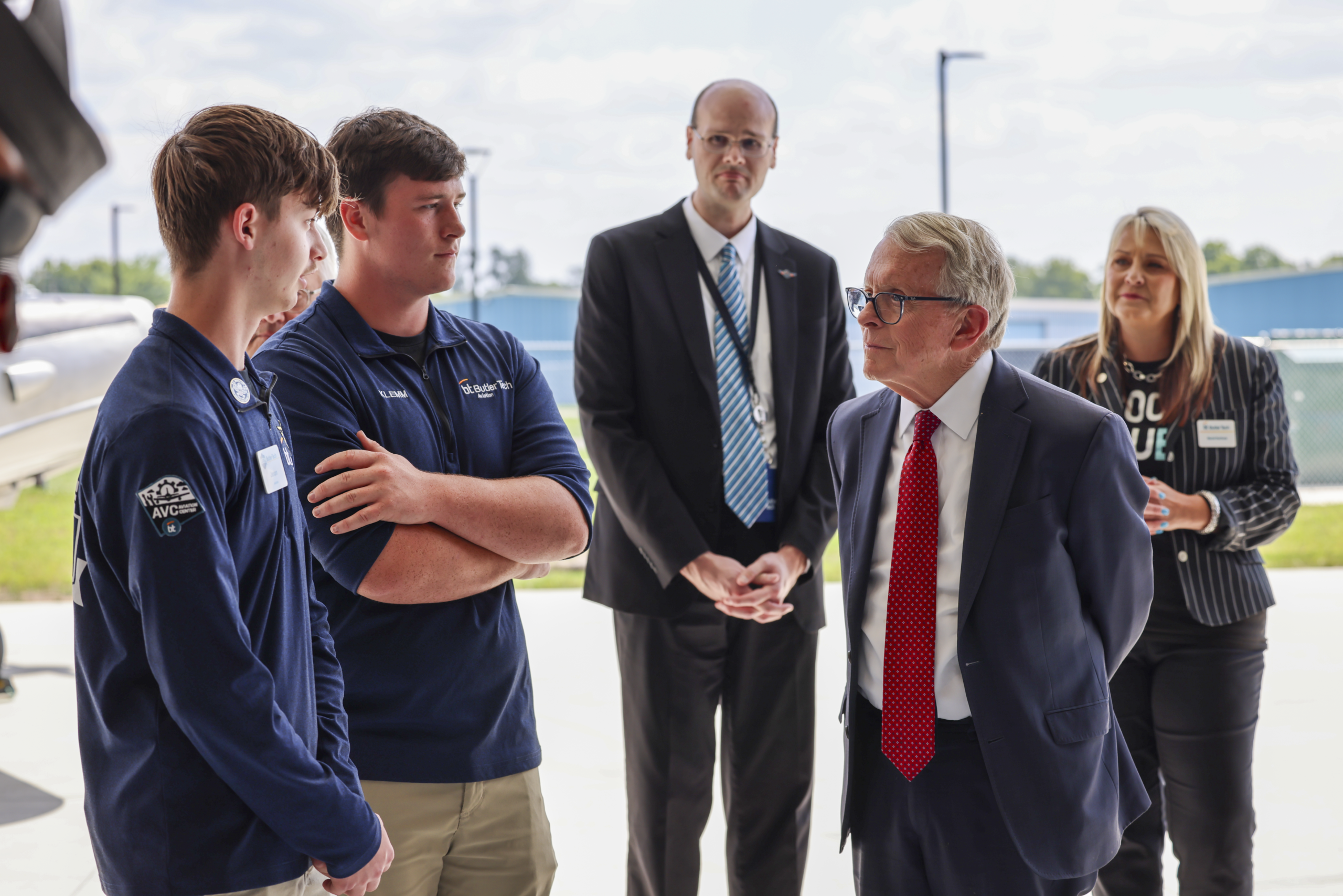
 Governor Mike DeWine and Lt. Governor Jim Tressel brought a statewide conversation about Ohio’s future workforce to Butler Tech Monday, Aug. 24, during a stop on the administration’s Heart of Opportunity Tour.
More than 100 business, education, workforce and community leaders gathered at Butler Tech’s Aviation Center in Middletown to discuss the partnerships and workforce strategies helping Ohio remain competitive and prepare for continued economic growth.
But before the panel discussion began, DeWine and Tressel had an opportunity to see that work through the eyes of Butler Tech students.
Joined by Superintendent/CEO Dr. William Sprankles and Executive Director of Workforce Services Marni Durham, the Governor and Lt. Governor toured the Aviation Center’s hangar and classrooms, talking one-on-one with students about their experiences, the skills they are developing and where they hope those opportunities will take them.
Those conversations provided a fitting start to a discussion that continually returned to one central challenge: making sure education can respond quickly enough to the changing needs of business and industry.
“Education at times needs to move forward at the speed of business,” Tressel said.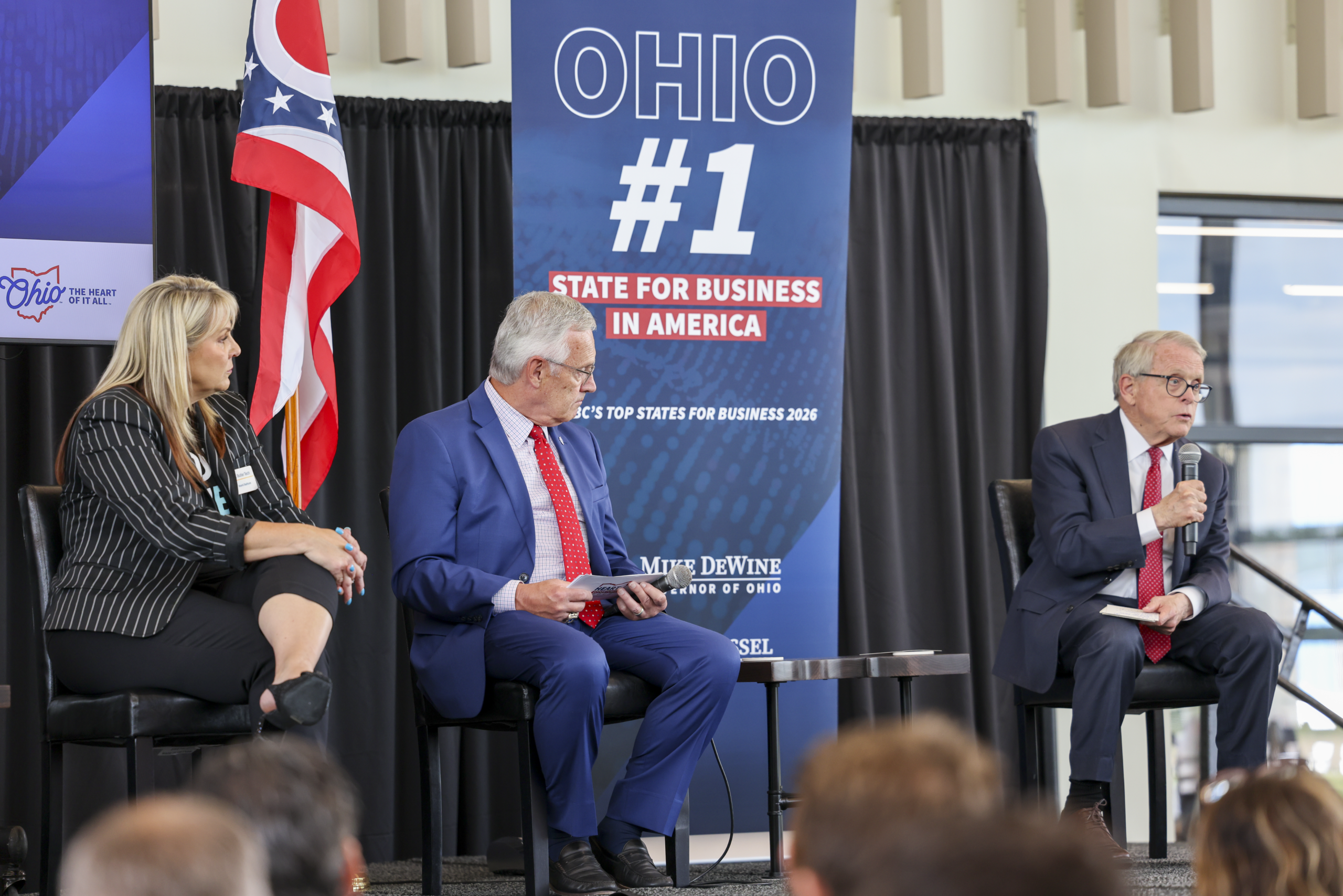
For Butler Tech, responding to those needs has increasingly meant bringing education, business, government, higher education and community partners together to create opportunities that could not be built independently.
During the panel, Durham recognized many of the partners in the room who have helped Butler Tech move major projects forward, including the Aviation Center, the expansion of the Bioscience Center and the Advanced Manufacturing Hub.
She pointed to funding and support from state and local government, JobsOhio, economic development organizations, higher education, business and industry, and Butler Tech’s Board of Education as examples of an ecosystem that has allowed the district to respond when new opportunities emerge.
That collaboration is increasingly important as demand for career-technical education continues to grow.
“Our biggest tragedy is that we need a lottery,” Durham said. “We need to grow to ensure that we never have a lottery again.”
The challenge is about more than creating additional seats for students. As businesses grow and industries evolve, increasing access to career-technical education also means increasing the number of students prepared to enter the workforce with relevant skills and experience.
Governor DeWine pointed to the collaboration happening at Butler Tech as an example of how Ohio can continue building that talent pipeline.
“What we’re seeing here at Butler Tech is exactly how we build the workforce Ohio needs for the future,” DeWine said. “When educators and employers work together to give students the skills and experiences they need to thrive, everyone benefits. This commitment to collaboration is part of what sets Ohio apart as the No. 1 state for business.”
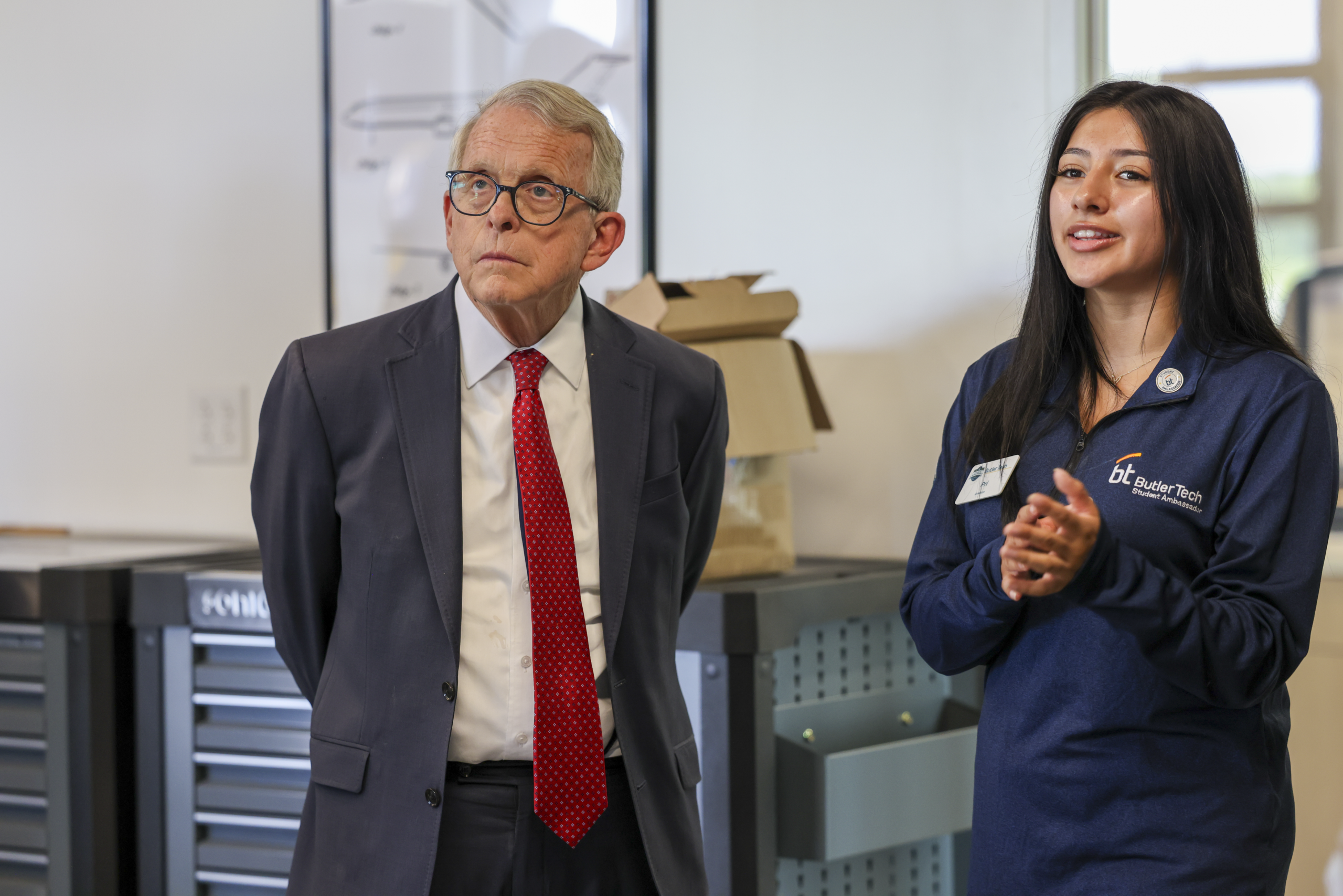 For Sprankles, that larger workforce impact begins with creating opportunities for individual students.
“Strong communities depend on a strong workforce, and building that workforce starts by creating meaningful opportunities for students,” Sprankles said. “At Butler Tech, we listen to the needs of our business and industry partners and respond by preparing students with the skills and experiences that lead to successful careers.”
“When our students succeed, they become part of the talent that helps local businesses grow, strengthens our communities and keeps Ohio moving forward.”
Monday’s visit was part of DeWine and Tressel’s statewide Heart of Opportunity Tour, which highlights the partnerships, investments and workforce strategies contributing to Ohio’s recognition as CNBC’s No. 1 state for business.