
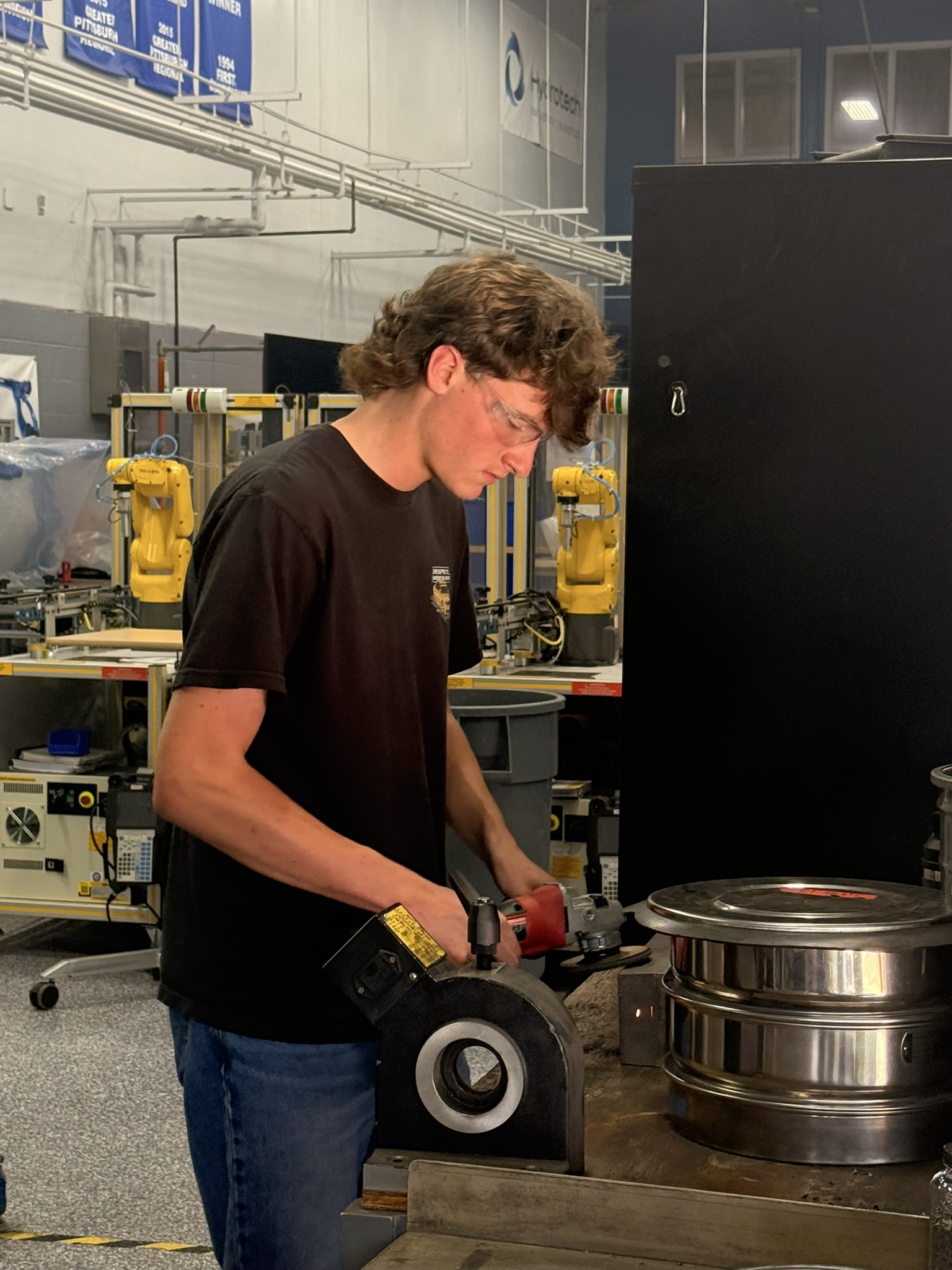
 Student-led enterprises across Butler Tech give students opportunities to apply their skills while operating real businesses and serving real customers.
Culinary Arts students operate Café Lee, a student-run restaurant serving the public. Cosmetology students gain experience serving clients through Salon Lee, while young adults with disabilities in Butler Tech’s Project LIFE program operate LIFE with Coffee, a coffee shop serving students and staff at the D. Russel Lee campus.
Those are just a few examples of student-led enterprises already operating across Butler Tech, each growing from the skills students are learning and the opportunities within their program.
At D. Russel Lee, BT Cast Iron Chips brings a newer student-led enterprise into advanced manufacturing and e-commerce, where Mechatronics students help produce and fulfill orders for a specialized industrial product sold to manufacturers, laboratories and researchers throughout North America and around the world.
And they didn’t take on all of that responsibility overnight.
BT Cast Iron Chips grew from a partnership with TechSolve, a nonprofit manufacturing operations consulting firm that had an existing cast iron chips product line. The partnership initially provided Butler Tech students with an opportunity to manufacture the product, while TechSolve managed much of the business operation.
When the opportunity arose for Butler Tech to assume the product line, Mechatronics instructor Ray Frank was willing to take the next step. Beginning this school year, students aren’t only making the product. They’re learning what it takes to operate the business around it.
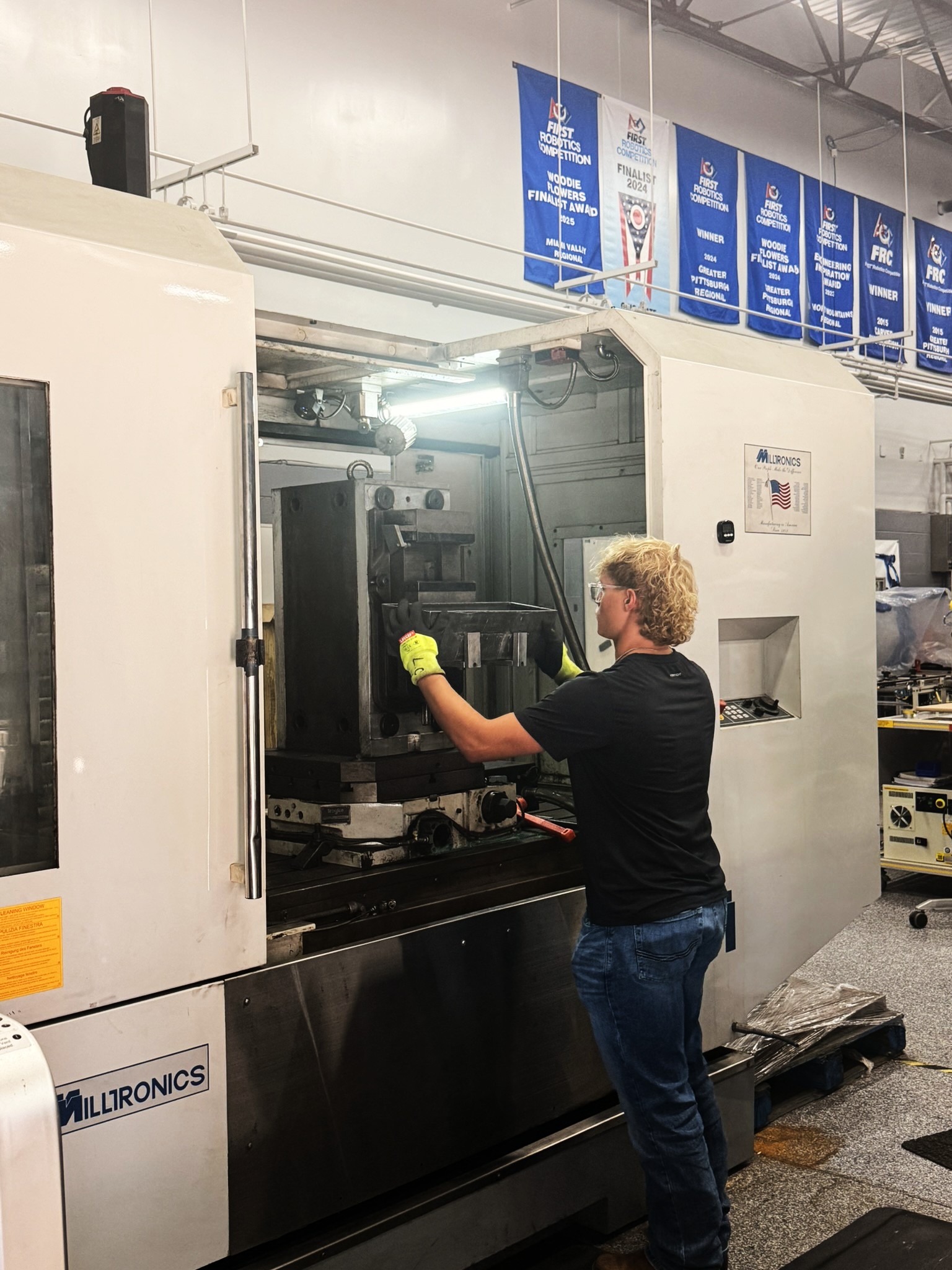
Senior Luca Cailotto (Lakota West) operates the machine used to manufacture the chips. Seniors Lucas Powers (Edgewood) and Lucas Sawvel (Lakota East) work alongside him preparing materials, bottling, packaging and helping with fulfillment, while senior Dylan Brown (Fairfield) is becoming increasingly involved in shipping and other business operations.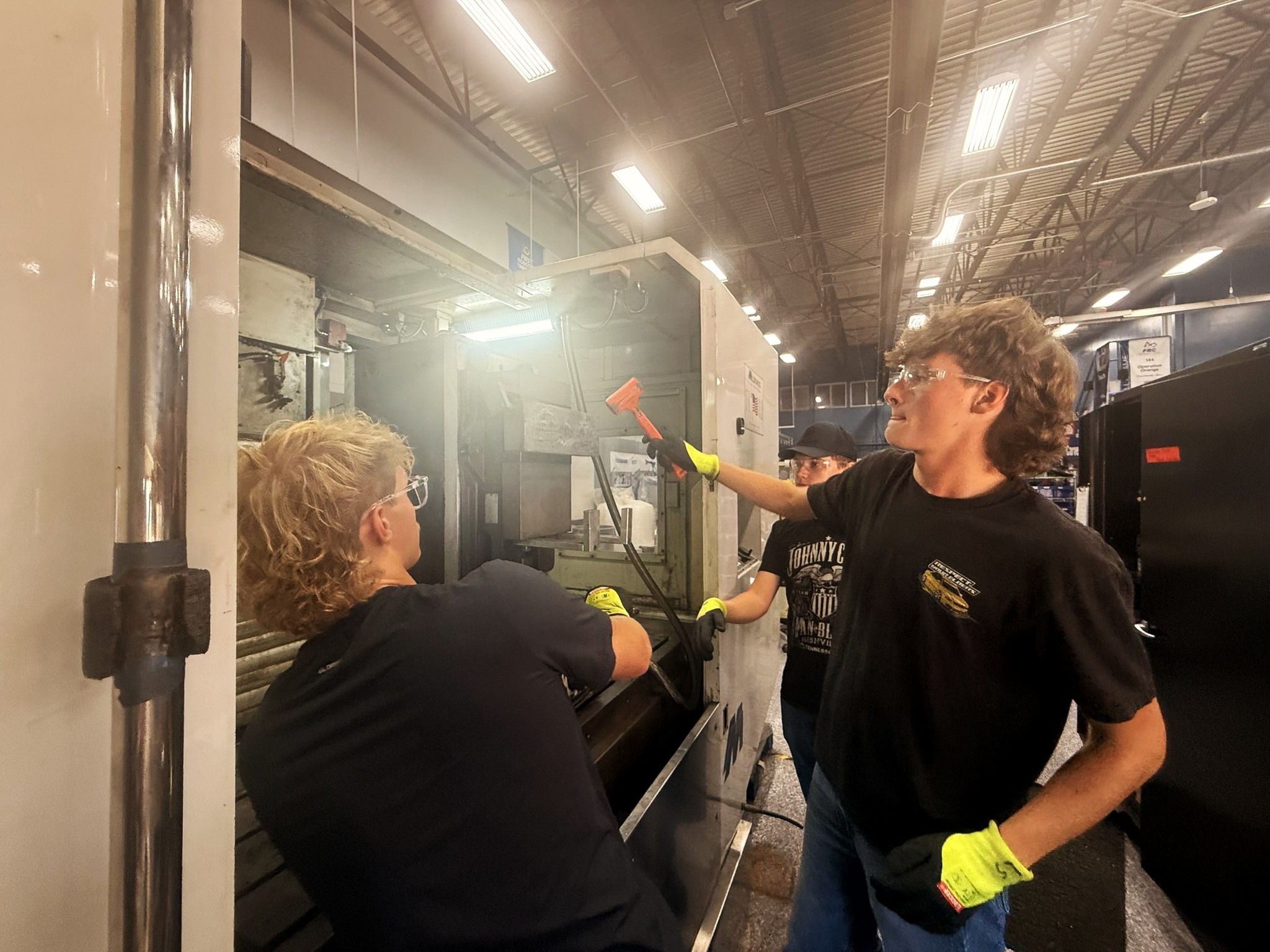
“From making the website and then going through the process of machining, bottling and shipping, that was a learning curve that we didn’t really know about before, other than just the making of the product,” Cailotto said.
That learning curve now includes e-commerce, customer communication, inventory, fulfillment, shipping and quality systems.
BT Cast Iron Chips manufactures chips from ASTM Class 30 gray cast iron for standardized corrosion testing of water-dilutable metalworking fluids. Because coolant is not used during manufacturing, students must carefully protect the product from contamination and moisture throughout production and packaging.
“What makes our chips unique is they’re untouched,” Sawvel said. “They’re not rusty. They don’t have another coolant on them. They’re not wet.”
That attention to quality matters because the students aren’t completing an assignment for a grade. They’re producing a product customers rely on.
The specialized nature of the business is also teaching the students that success isn’t always about marketing to gain new customers. Maintaining relationships with established customers matters just as much.
“I think most of the people that buy from us are long-term partners that have consistently ordered in past years,” Powers said. “It’s less about marketing and more about how you can maintain the relationship with those partners.”
The enterprise also creates a return that reaches beyond the business itself. Proceeds help support opportunities in Mechatronics and advanced manufacturing’s career-technical student organizations, including Butler Tech’s FIRST Robotics program.
“It’s definitely cool to know that the work that we’re putting in and doing is directly funding our FIRST Robotics team,” Sawvel said.
In previous years, proceeds have also supported Butler Tech’s Tools for Schools initiative, helping other Butler Tech students obtain tools needed for their career-technical programs. Continuing to give back is something the students say remains important to them.
The seniors are also already thinking about another responsibility: preparing younger students to eventually take their places.
Sawvel remembers being a junior when he and his classmates were identified as leaders for the BT Cast Iron Chips project because they showed an interest in the work.
“I definitely want to focus on finding some juniors that have interest in it,” Sawvel said. “That’s what happened with us last year. As juniors, we were picked as people that had interest in it, and then we were taught it and we took it over.”
Powers shares that goal.
“I’d like to continue that onto our juniors,” he said, “to teach them and get them ready for business.”
 That progression is part of what makes student-led enterprise possible.
It doesn’t have to begin with an international customer base, an e-commerce operation or responsibility for an established product line. It can begin with an authentic opportunity connected to what students are already learning.
For an industry partner, that might mean opening a door, sharing expertise or helping students gain meaningful experience that can grow over time.
For an instructor, it might begin by trusting students with one meaningful responsibility and seeing what they’re ready to take on next.
For Frank and his students, one opportunity grew into another as experience built confidence and responsibility built trust.
What will Butler Tech students be ready to lead next?

